
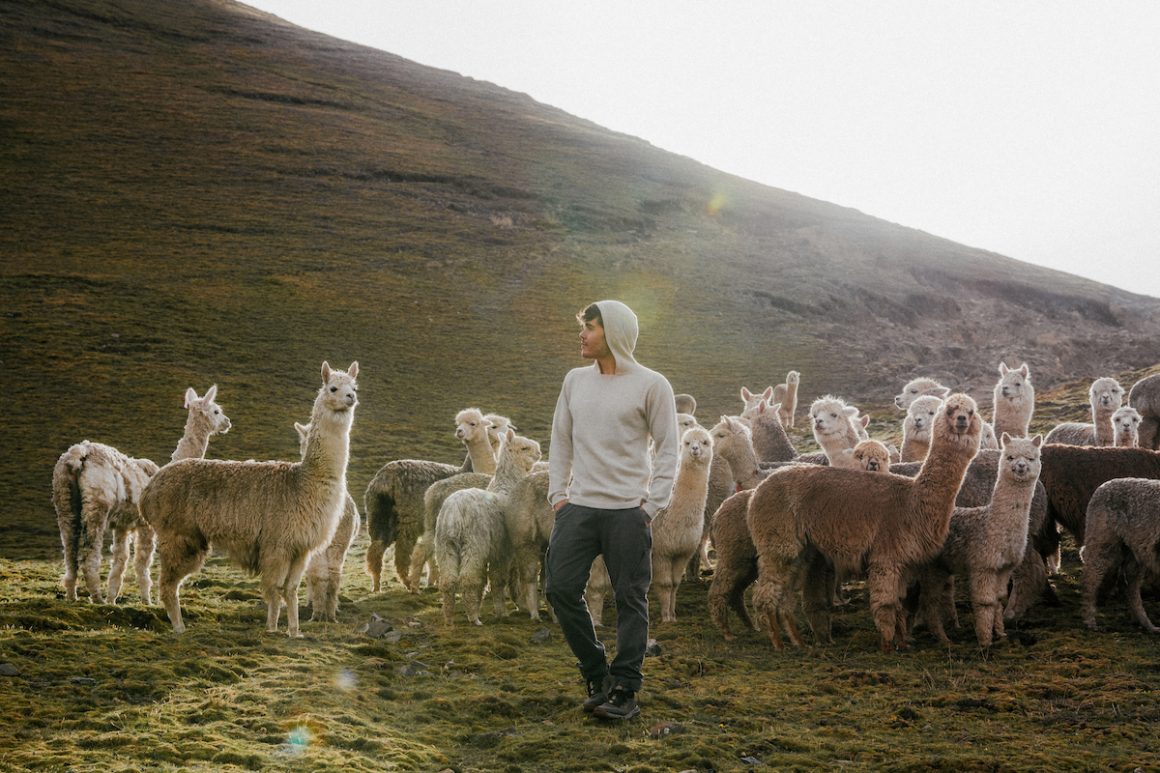
There is a tendency in contemporary apparel to refine material into abstraction, to translate fiber into performance language, to compress origin into a line item, and to let distance do the work of simplification. PAKA has, from the beginning, resisted that drift, holding instead to a premise that is almost disarmingly literal: that what we wear should remain legible, that its material, its maker, and its point of origin should not dissolve as it moves outward into the world.
Before there was a product, there was a piece of gear—an alpaca sweater purchased from a local artisan during a 2015 backpacking trip through the Andes, worn repeatedly, relied upon, and, in time, difficult to replace once back in the United States. What registered was not novelty, but absence: despite its performance, alpaca remained largely unknown within the broader apparel landscape. That gap between utility and recognition became the entry point.
Kris Cody went back to Peru, reconnected with the original maker, and began assembling the early structure of what would become PAKA—less a conventional supply chain than a set of relationships, anchored in place and built incrementally from the ground up.
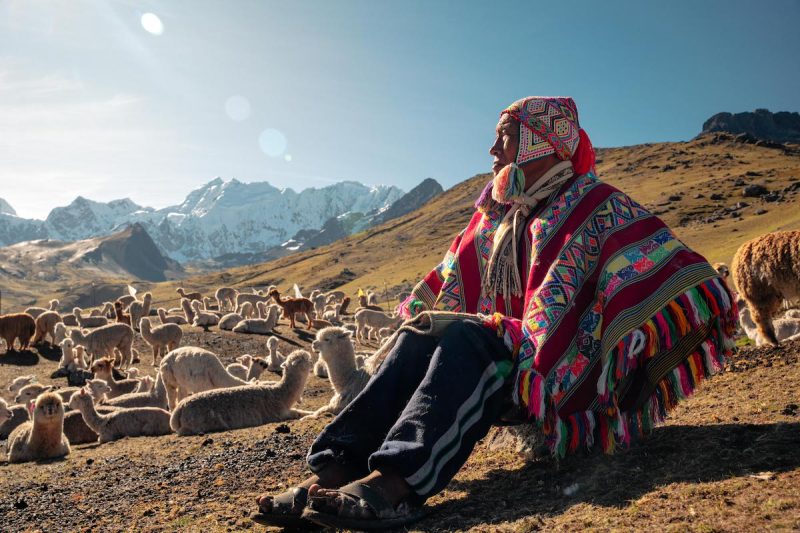
From there, the company’s framework establishes itself quickly: alpaca, sourced from herds in the high Andes; alpaqueros, whose livelihoods are tied to those animals; and Quechua weavers, whose work translates fiber into finished form.
Where most brands smooth over these transitions, PAKA marks them. Each garment carries a handwoven Inca ID—a small textile signature identifying the individual artisan responsible for its making—a small insistence that authorship remains attached.
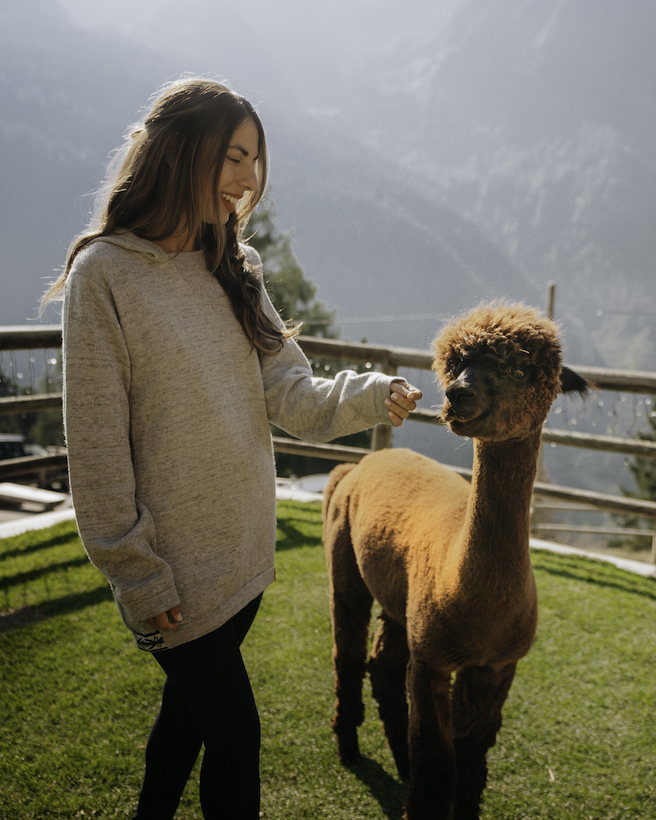
Growth does not alter that framework so much as test it. By 2025, the company is operating at a scale that would typically require a degree of separation: tens of thousands of kilograms of alpaca fiber moving annually through a supply chain that touches thousands of families across Peru. What distinguishes this phase is not simply volume, but the attempt to formalize what had previously been embedded—relationships becoming systems, practices becoming policy.
That transition was made explicit with the establishment of the PAKA Foundation in 2025, a registered 501(c)(3) that consolidates the brand’s social and environmental initiatives into a defined structure, funded by one percent of annual revenue and designed to extend beyond the logic of early-stage growth.
Running parallel to this, PAKA operates as a Certified B Corporation, placing its material and social commitments within an external framework that evaluates governance, environmental performance, and community impact against a defined standard. The impact report that accompanies this moment reads like a document concerned with tracing consequence as much as intent.
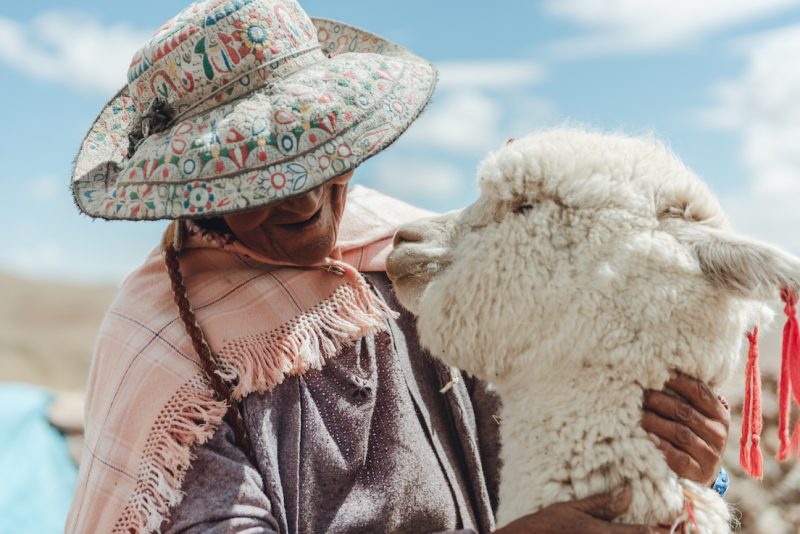
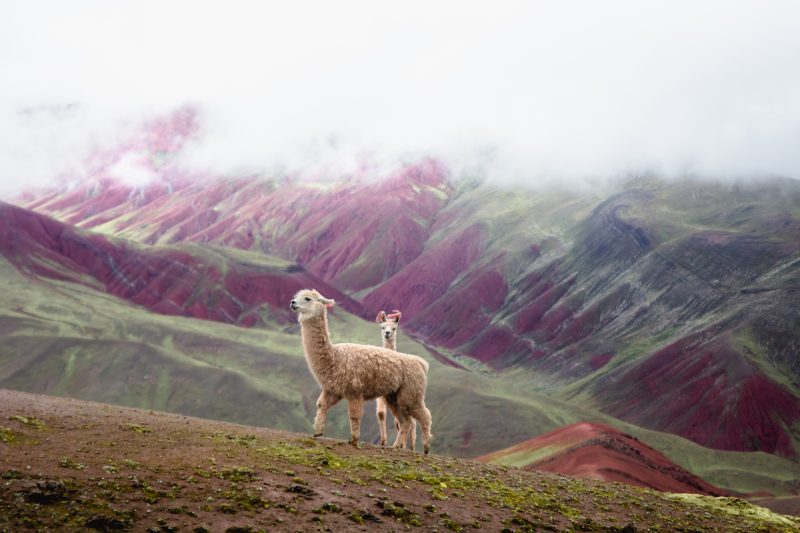
At the base of that accounting is the animal itself. Alpacas, adapted to one of the most severe and variable climates on the planet, produce the fiber that underwrites the entire system, yet remain vulnerable to the same environmental pressures that define their resilience: drought, disease, and limited access to veterinary infrastructure among them.
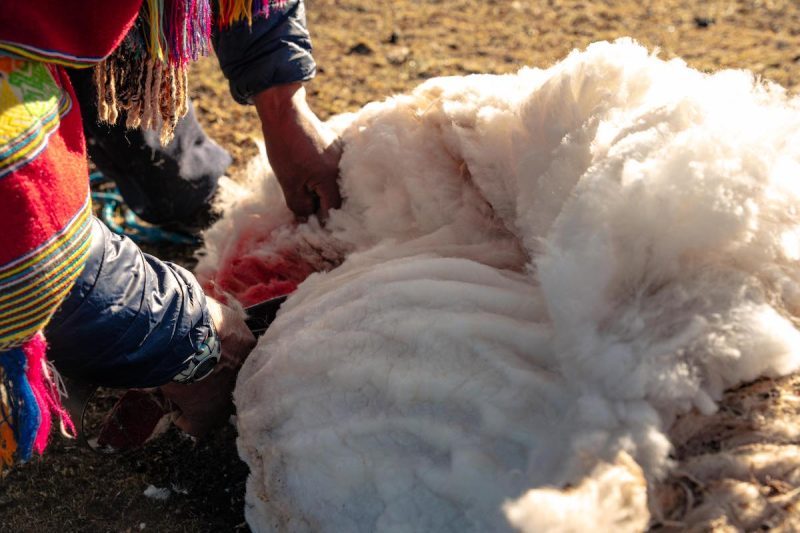
In response, PAKA’s 2025 programs focus on herd stability at scale: more than 60,000 alpacas supported through coordinated health interventions—vitaminization, parasite control, medical treatment—paired with educational workshops intended to extend that care beyond a single season. The work is incremental and technical, but its implications are cumulative. Healthier animals yield stronger fiber; stronger fiber sustains product integrity; product integrity feeds back into the economic viability of the communities that raise them.
That same logic extends into breeding. With limited access to high-quality males, many herds face reduced genetic diversity, leading to weaker animals and diminished long-term value. The distribution of 40 breeding males across participating communities, alongside training in herd management, is framed not as intervention but as a recalibration within the system as an attempt to restore balance.
If the animals represent the beginning of the chain, the alpaqueros define continuity. Working at elevations that can exceed 15,000 feet abs, these communities operate within constraints that are environmental as much as economic such as thin air, limited infrastructure, and restricted access to diverse nutrition. Alpaca farming in this context is less an industry than a condition of life, its stability subject to forces well beyond market demand.
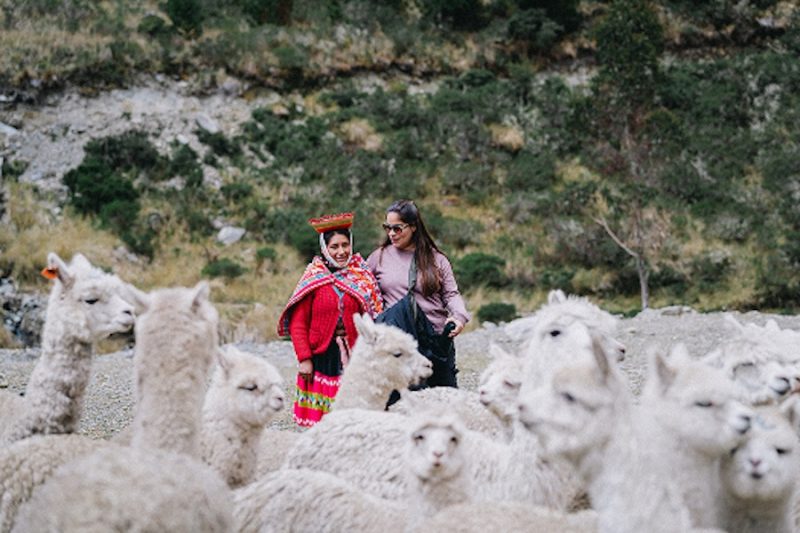
The report outlines a set of responses that move laterally across those constraints. Year-round purchasing agreements for alpaca fiber attempt to smooth income volatility; nutritional programs address anemia and dietary imbalance; school renovations—classrooms, kitchens, sanitation—reframe education as both infrastructure and outcome. Parallel efforts, including the construction and rehabilitation of greenhouses, aim to reintroduce a measure of food security into an environment where it is otherwise difficult to sustain.
In aggregate, these initiatives reach approximately 7,300 families in 2025, accompanied by the provision of more than 16,000 meals and expanded access to fresh produce through localized agriculture. The scale is significant, but the emphasis remains grounded: not transformation in the abstract, but continuity under pressure.
Further along the chain, the fiber passes into the hands of Quechua weavers, whose work carries a different form of fragility. Here, the risk is not environmental but cultural—the gradual erosion of techniques that have historically been transmitted through practice rather than preservation.

Through its partnership with the Centro de Textiles Tradicionales del Cusco, PAKA supports a network of more than 300 female artisans, structuring their involvement in ways that bind economic stability to cultural retention. Regular work, access to materials, and incremental improvements to tools and working conditions address immediate needs, while biweekly gatherings, shared meals, collective production, the presence of children, create a space where knowledge continues to circulate.
The Inca ID, attached to each finished garment, is the visible trace of that system, but the system itself is less easily condensed: a distributed network of labor and memory, sustained not by singular intervention but by repetition.
The extension into education follows a similar logic, though its timeline is longer. Through the PAKA Scholars initiative, 15 university scholarships were funded in 2025, bringing the total to 24, with four graduates completing their studies that year. The focus—young women in Cusco facing structural barriers to higher education—positions the program as both corrective and generative.
The addition of an Entrepreneurial Fund in 2025, supporting graduates in the creation of their own businesses, suggests a shift outward from sustaining existing systems to enabling new forms of participation within them.
Running parallel to these social structures is a material accounting that is equally precise. In 2025, 98 percent of the fibers used in PAKA products are natural, organic, and/or recycled, with 60 percent derived from natural sources including alpaca, organic cotton, and merino wool. Traceable alpaca fiber accounts for 45.4 percent of total use, linking finished garments back to specific points of origin within the supply chain.
The remaining figures are presented with similar clarity: virgin synthetics reduced to 1.7 percent, with a stated aim of elimination as alternatives become viable; zero intentionally added PFAS across 2025 products. There is little rhetorical framing around these numbers. They function instead as boundaries—evidence of a system attempting to define its own limits.
Nearly a decade on, what PAKA has built is most akin to a set of interdependencies held in tension: animal health and material quality, cultural preservation and economic stability, growth and proximity. The company describes this as a “chain of care,” extending from the high Andes outward into everyday use.
What the 2025 impact report makes clear is that such a chain does not sustain itself. It requires structure, repetition, and, increasingly, formalization. The creation of the PAKA Foundation—and its alignment with external standards such as B Corp certification—marks that recognition, the point at which origin, no longer sufficient as narrative, is translated into something durable enough to withstand scale.
As the company approaches its ten-year mark, the underlying question remains unresolved: how to continue expanding without dissolving the relationships that give the material its meaning.

Field Notes: PAKA Founder Kris Cody
In conversation, Cody returns to the same underlying premise: building from source, and attempting to hold that position as the company expands.
On the original vision and early constraints…
“The original idea was simple: create the best alpaca gear and connect people to where their things come from. At the time, I don’t think I had a clear picture of how big that vision could evolve. As PAKA is my first-ever company and brand, I was naive when I launched the brand out of my dorm room for what this journey would require—not to mention doing something that’d never been done before. There’s a saying that most founders likely wouldn’t start a company if they fully realized the reality of the journey. Bootstrapping PAKA without investment was extremely difficult. That being said, I think it’s what has made PAKA as special as it is—staying true and honest to where we started, and doing it our way.”
On differentiation and material innovation…
“I think a big part of it is authenticity. Everything we do is rooted in a real story and relationships. We are far from the boardroom.
On the product side, we’re focused on proving that natural fibers can make the best apparel. Alpaca is still less known and relatively underutilized, and we’re continuing to push what’s possible there with products like Breathe (the first alpaca activewear) and PAKAFILL (our patented outerwear insulation made with traceable alpaca fiber). We have a lot more in the pipeline.”
On the favorites that hold up in daily use…
“My favorite pieces are the basics—Men’s Boxer Briefs, Trail ¾ Crew Socks, and Essential Tee—I wear them every single day. We worked hard to get these core pieces right, and they have a lot of engineering in the fabric most people will never even notice. They’re pieces you don’t normally think about, but once you have them there’s no going back to anything else.”
On the future of sustainable performance apparel…
“I believe the future is natural. Nature has evolved with all the performance we need, and we’ve traded that over the past century for oil-based apparel (⅔ of all clothing currently made is synthetic). At PAKA, we’re reimagining and refining natural fibers for modern use. We’re also seeing a big shift with our customers wanting materials that feel better, last longer, and have real meaning/intention behind them.”
On what he’s most proud of…
“Our community—our customers, partners, and PAKA in-house team make this a dream place. And not compromising and staying true to our values.”
On returning to source…
“Spending time at the source inspires me more than anything else. I was just down in Peru last week visiting Quechua weavers at high-altitudes in the Andes, and then traveled out to the Peruvian jungle to visit the farms and people behind our organic Pima cotton. I came back energized and inspired with ideas for both our product and brand. There’s a simplicity that we always try to honor—timeless, functional products made to discover our world and connect you to the people, place, and material. PAKA serves as a vessel to connect people to origin.”