

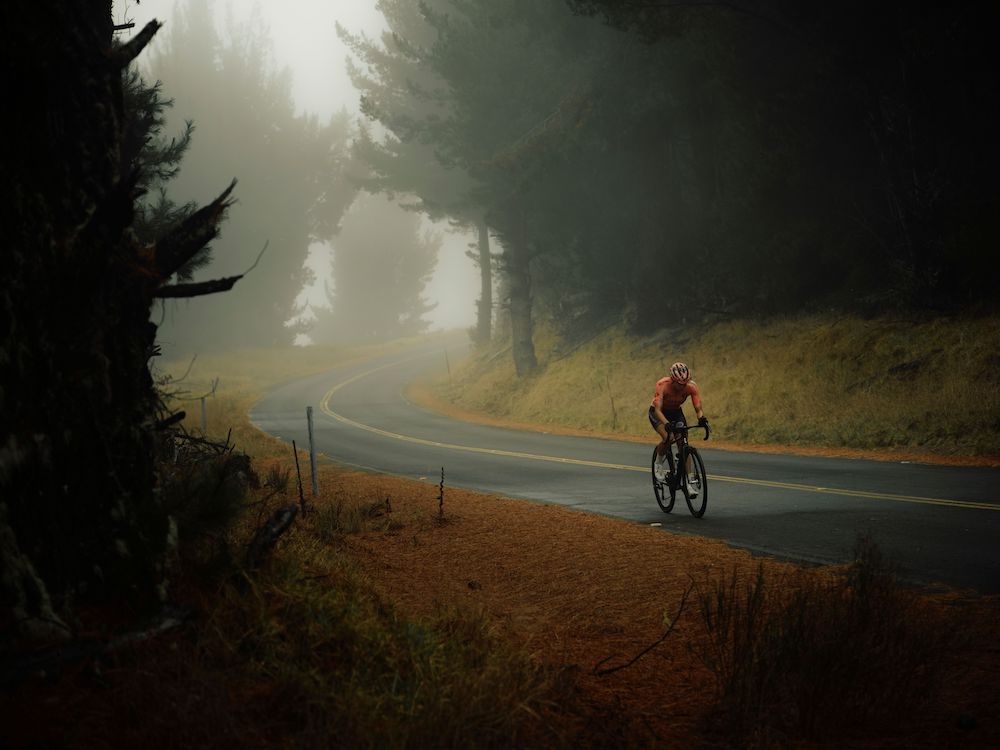
There is a point on Mauna Kea, somewhere just above 11,000 feet, on the volcano’s flank, where paved road gives way to gravel, the oxygen thins to a fraction of what it was at the waterline, and the gradient turns ugly. Five climate zones below, the Pacific Ocean is still visible. Most people at this point have arrived by car. Hannah Otto was on her bicycle.
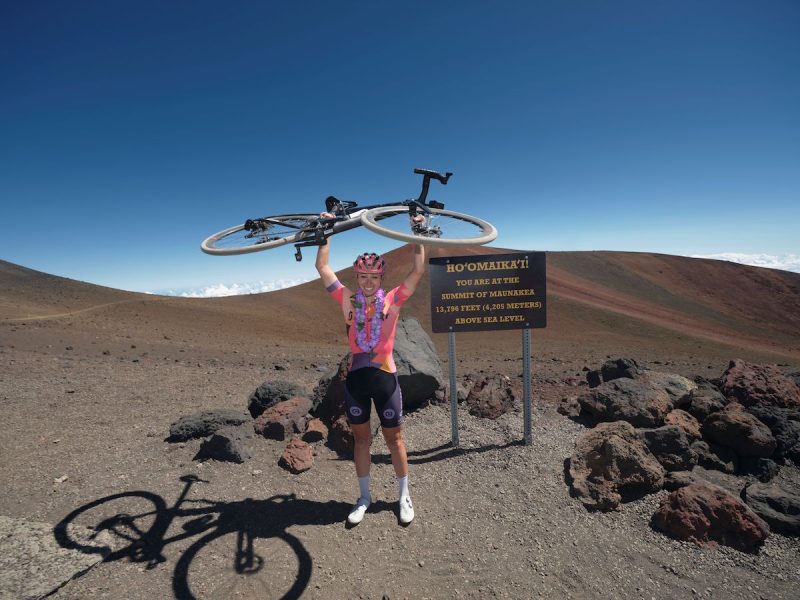
On April 8, SCOTT Sports athlete Hannah Otto set a new women’s Fastest Known Time (FKT) on the Mauna Kea sea-to-summit cycling route, completing the 55-mile, 13,700-foot climb in 5 hours, 43 minutes, and 50 seconds. The effort is documented in a new film, Infinite Pursuit: Hannah Otto vs. Mauna Kea, released alongside the announcement.
Who Is Hannah Otto
If you haven’t been following the endurance cycling world, you should start here. Otto started racing at nine years old, turned professional in triathlon, and after winning the Overall Amateur XTERRA World Championship title twice, shifted her focus entirely to the bike. From there followed five collegiate cycling national championships, multiple Pro-XCT wins, and appearances on the USA Cycling World Championship XCO squad. She was named to the 2020 Olympic Long Team and won the Leadville 100 MTB race in 2022 — the latter coming one week after she separated her shoulder in a crash. She won Leadville by five minutes.
Her degrees in Athletic Training and Exercise Science led to a Board Certified Athletic Trainer credential and a USA Cycling Certified Coaching license.
She’s one of a handful of competitors, men or women, who have raced all four years of the Life Time Grand Prix and finished top 10 in three consecutive seasons. The LTGP is a six-race series mixing gravel and mountain bike disciplines — including Unbound, Leadville, and Sea Otter. But the FKT work is what sets her apart from the standard professional endurance racer.
The Route
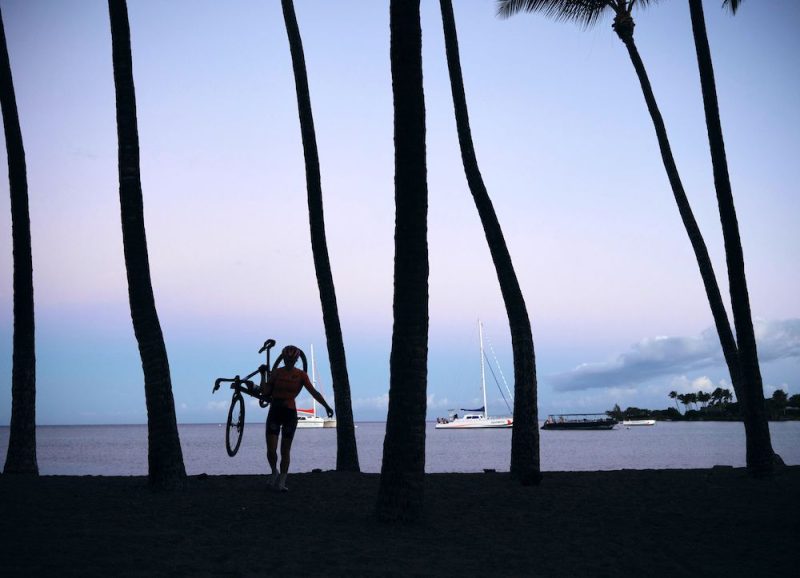
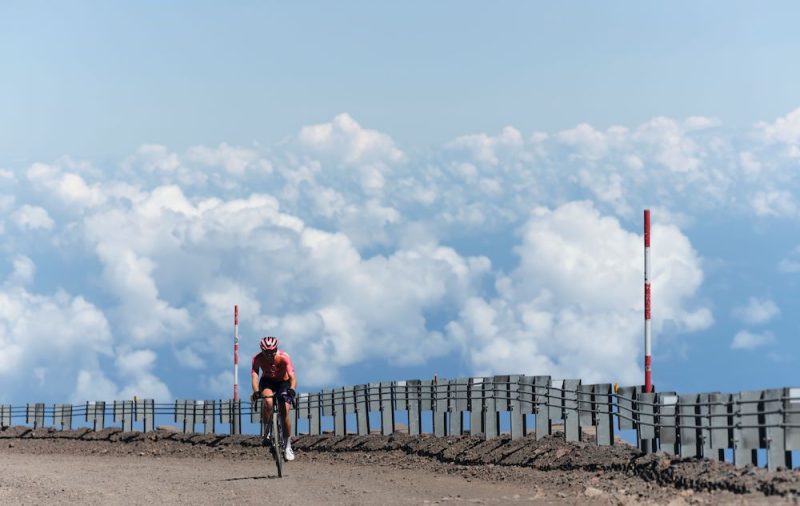
To understand what she did, you first have to understand what Mauna Kea is, which is less a mountain and more a geological argument of scale. The climb begins with the waves of the Pacific lapping at the shore and ends 13,803 feet above sea level at the volcano’s summit, traveling through five distinct climate zones…Lush rainforest at the base, scrubland, then the saddle, a remote high-desert highway bisecting Mauna Kea and its neighbor Mauna Loa, each larger than some mountain ranges, followed by the access road’s sustained double-digit gradient and finally, the summit plateau, which resembles the surface of the moon.
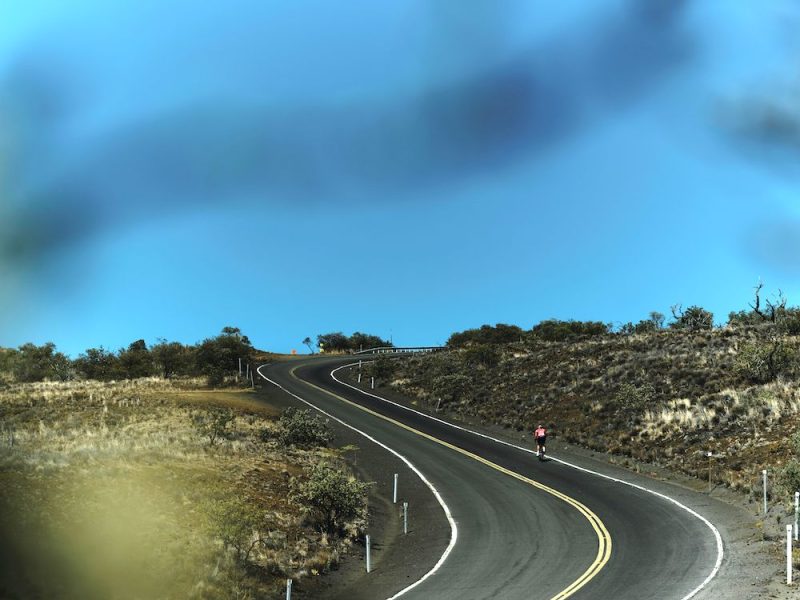
The grade averages 9.9% for the final half of the ride, with sections reaching 16%. At the summit, riders are breathing with 42% less available oxygen. There is also a gravel section near the 9,500-foot mark that demands either a second bike or enough gearing to manage loose volcanic road, after already riding 40 miles and 6,000-plus vert to get there. PJAMM Cycling, which tracks and ranks the world’s hardest cycling climbs, lists Mauna Kea as number one.
The Time
Otto completed it in 5:43:50, a new women’s FKT on the sea-to-summit course. For context, former pro cyclist Phil Gaimon, who has a well-documented obsession with this climb, holds the men’s Strava KOM at 4:52:55, a time he set in February 2024, shaving more than seven minutes off the previous record.
“Mauna Kea is one of those efforts where you know pretty quickly it is going to ask everything from you,” Otto said in a statement. “It is long, exposed, and there is really nowhere to hide once you are in it. Setting the FKT was special, but more than anything, I am proud of how much went into the effort and how we were able to see it through.”
The Moab Triple Crown
Before Mauna Kea, Otto had already built a body of FKT work that doesn’t really have a comparable equivalent in women’s mountain biking. After relocating to Utah in 2018, she conceived what she’d eventually call the Moab Triple Crown: fastest known times on three of the region’s most demanding and iconic routes, each one testing a different set of capacities. She started with the Whole Enchilada, a 55-mile technical loop through the La Sal Mountains, crushing the previous record by nearly an hour with a time of 5 hours and 50 minutes in 2022.
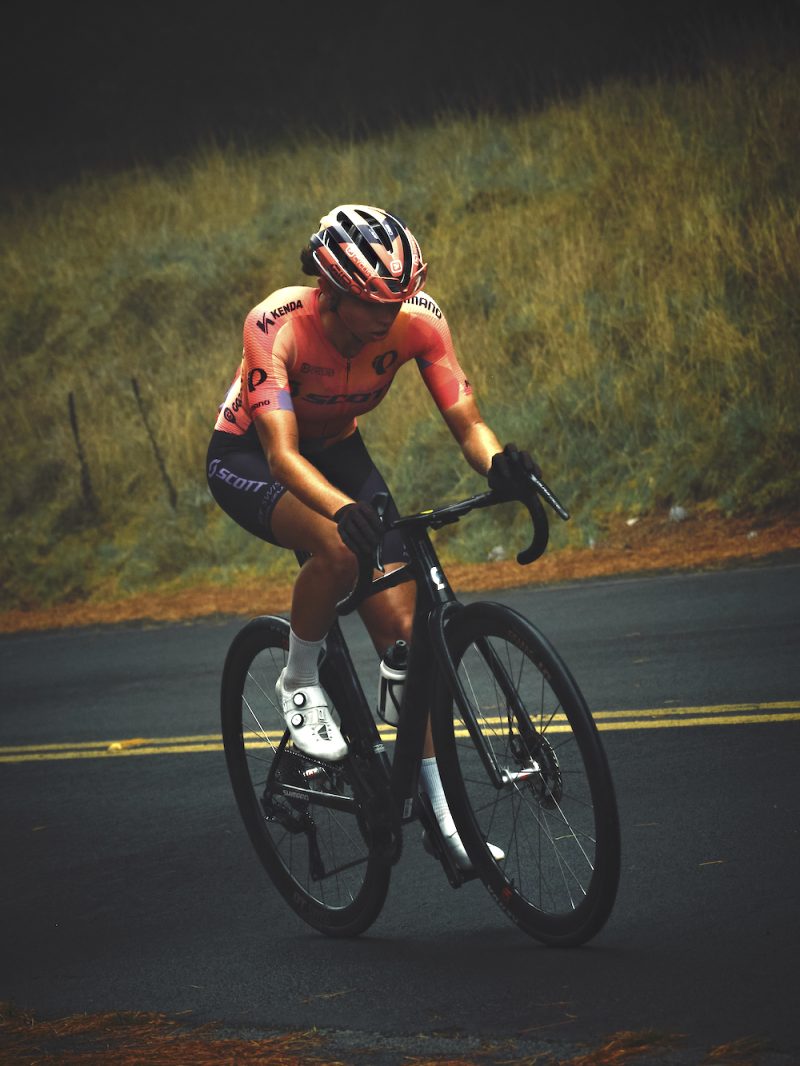
The Kokopelli Trail came next and didn’t cooperate on the first try. In 2023, temperatures dropped dramatically during her first attempt, with wind chills reaching single digits and the trail buried in two to three inches of snow. She developed hypothermia and frostbite on her fingers before finally pulling out. She came back in 2024 and her second attempt produced a time of 11 hours, 53 minutes, and 30 seconds: an hour faster than the previous women’s record of 13:07, set by Kaitlyn Boyle in 2020. The White Rim Trail — 100 miles through Canyonlands National Park — fell on May 2, 2025, in 6 hours, 36 minutes, completing the Triple Crown she’d been building since 2022.
Mauna Kea is a different category. The Triple Crown routes are deep in Otto’s home terrain, at elevations she’s raced hundreds of times, while Mauna Kea starts at sea level. “The goal that I have in this sport is to demonstrate to people that they are capable of so much more than they imagine,” Otto said. “And I think offering that visual component so people see my struggles, not just my triumphs — like the first time doing Kokopelli, when I fell short — I think that’s really important for people to see and understand that even pros still fall short sometimes. That’s OK, you just keep going.”
The Film
“Infinite Pursuit: Hannah Otto vs. Mauna Kea” follows the effort from preparation through execution, described as capturing “the physical and mental demands of a ride where pacing, weather, altitude, and terrain all become part of the outcome.” Which, given the route, is not a stretch.
“Hannah’s Mauna Kea ride is exactly the kind of effort that deserves a larger spotlight,” said Garth Spencer of SCOTT Sports USA. “This is a real athletic achievement on a route that carries weight well beyond a single segment or social post for SCOTT.” SCOTT hosted a screening of Infinite Pursuit during Sea Otter Classic on April 17; the Strava segment from the ride went live April 14.
There are climbs, and then there are climbs…Mauna Kea is the one cyclists agree is hardest, and Otto’s time is now on top.
